After the Spreadsheet: A Practical Guide to Modernizing Finance and Operations Without a Two-Year Implementation
Somewhere in your organization right now, a finance analyst is reconciling three versions of the same report. One was generated by the ERP. One was built in Excel by the operations team. One was emailed over from a regional manager who maintains his own tracking file. None of them agree.
This is not a data quality problem in the traditional sense. It is an architecture problem—and it is one of the most pervasive and costly inefficiencies inside midmarket companies that have scaled past the point where manual workflows can keep up, but have not yet made the transition to systems that can.
The Midmarket Trap
Spreadsheets are not inherently bad tools. For small teams managing limited data across predictable workflows, they are flexible, accessible, and functional. The problem emerges when organizations grow beyond the conditions that made spreadsheets appropriate.
As headcount increases, transaction volume expands, and reporting requirements multiply, the spreadsheet ecosystem that once served a 50-person company begins to fracture. Files proliferate. Version control breaks down. Manual data entry—never efficient—becomes a meaningful source of operational error. And the employees responsible for maintaining these systems spend an increasing share of their time managing the infrastructure of the spreadsheet itself rather than analyzing the information it contains.
In a 2023 survey of US finance professionals, a significant majority reported spending more than a quarter of their weekly work hours on data gathering, formatting, and reconciliation tasks that added no analytical value. That is not a productivity observation. It is a structural indictment of the systems those professionals are working within.
What This Is Actually Costing You
The direct costs of spreadsheet dependence are relatively easy to quantify: overtime hours, headcount allocated to manual data management, and the periodic cost of correcting errors that compound through a disconnected reporting chain. These costs are real and they are measurable.
The indirect costs are harder to see but often larger in magnitude.
When financial reporting is slow—because the data that feeds it must be manually assembled from multiple sources—leadership is making decisions on information that is already outdated. A CFO reviewing a monthly close that took twelve days to produce is not reviewing the current state of the business. She is reviewing a historical artifact, and she is doing so while the business continues to move.
When operations teams are managing capacity, procurement, and project tracking through disconnected files, the coordination overhead between departments becomes significant. Requests are made, responses are delayed, data is misaligned, and decisions that should take hours take days.
And when experienced employees—the ones who know which spreadsheet is authoritative, which formula is fragile, and which manual adjustment needs to be made before the report goes to leadership—leave the organization, they take that institutional knowledge with them. What remains is a system that no one fully understands and everyone is afraid to change.
Why Most Modernization Efforts Stall
Organizations that recognize this problem frequently attempt to address it through enterprise system implementations. Some of those efforts succeed. Many do not—at least not on the timelines and budgets originally projected.
The reasons for implementation failure are well-documented: scope creep, inadequate change management, poor data migration planning, and the tendency to treat a technology project as a technology project rather than an organizational transformation. But there is a less-discussed factor that deserves attention: the all-or-nothing framing that many implementations adopt from the outset.
When an organization commits to replacing its entire financial and operational infrastructure in a single, comprehensive initiative, it is accepting enormous execution risk. The project scope is large, the stakeholder dependencies are complex, and the time between project launch and realized value is long enough that organizational priorities can shift before the implementation is complete. Teams that were eager to modernize at the start of the project are exhausted and skeptical by month fourteen.
A more durable approach is modular modernization: identifying the highest-friction workflows first, replacing those workflows with integrated solutions, and building organizational confidence through early wins before expanding scope.
A Pragmatic Roadmap
The following framework is not a universal prescription—every organization's data environment is different—but it reflects the sequencing that consistently produces faster results with lower implementation risk.
Step One: Identify the Highest-Cost Manual Workflows
Before selecting any technology, conduct a structured audit of where manual data handling is consuming the most time and generating the most errors. In most midmarket companies, three to five workflows account for the majority of the pain: monthly close consolidation, budget-versus-actual reporting, procurement tracking, inventory reconciliation, and intercompany billing are common candidates. Document the current process, the time investment, the error frequency, and the downstream impact of delays.
Step Two: Prioritize Integration Over Replacement
In many cases, the systems you already have are capable of more than they are currently delivering. Before committing to a new platform, assess whether existing tools can be connected through integration middleware or API-based automation. Connecting your ERP to your planning tool and your CRM to your revenue reporting system can eliminate significant manual data handling without requiring a full platform migration.
Step Three: Migrate Incrementally, Validate Continuously
For workflows that genuinely require new systems, migrate in phases rather than in a single cutover. Run parallel processes during the transition window, validate data integrity at each stage, and establish clear success criteria before decommissioning legacy workflows. This approach extends the transition timeline modestly but dramatically reduces the risk of a failed cutover that forces a retreat to spreadsheets under pressure.
Step Four: Build Reporting Infrastructure Early
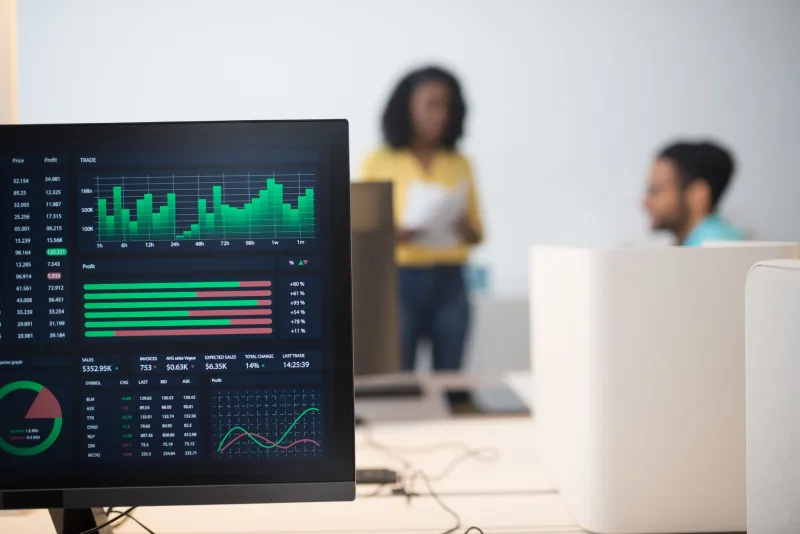
One of the most immediate and visible benefits of integrated systems is the ability to generate real-time reporting without manual assembly. Prioritize building this infrastructure early in the modernization sequence—not as an afterthought once the operational workflows are stable. When leadership begins receiving faster, more reliable reports, organizational appetite for continued modernization increases substantially.
The Compounding Return of Getting This Right
Organizations that successfully migrate from spreadsheet-dependent workflows to integrated operational systems do not simply save time on data management. They change the nature of what their finance and operations teams are capable of doing.
Analysts who were previously spending 25 hours a week on data assembly are freed to perform the analysis that those hours were displacing. Reporting that previously required twelve days can be produced in two. Decisions that previously waited for a monthly close can be made on current data.
That is not a marginal efficiency gain. It is a structural upgrade to the intelligence infrastructure of the business—and it is available to organizations that are willing to approach modernization with pragmatism rather than waiting for the perfect conditions that rarely arrive.